Showing posts with label Great Lessons. Show all posts

Monday, 21 November 2016

Great Lesson 1 : Molecules [Post 10]

After working on the periodic table and atoms, work can start on the study of molecules. I love this lesson as it enables the child to become familiar with the basic molecules which we can then refer to in other presentations such as a lesson on photosynthesis. Allowing us to go much deeper with our presentations.
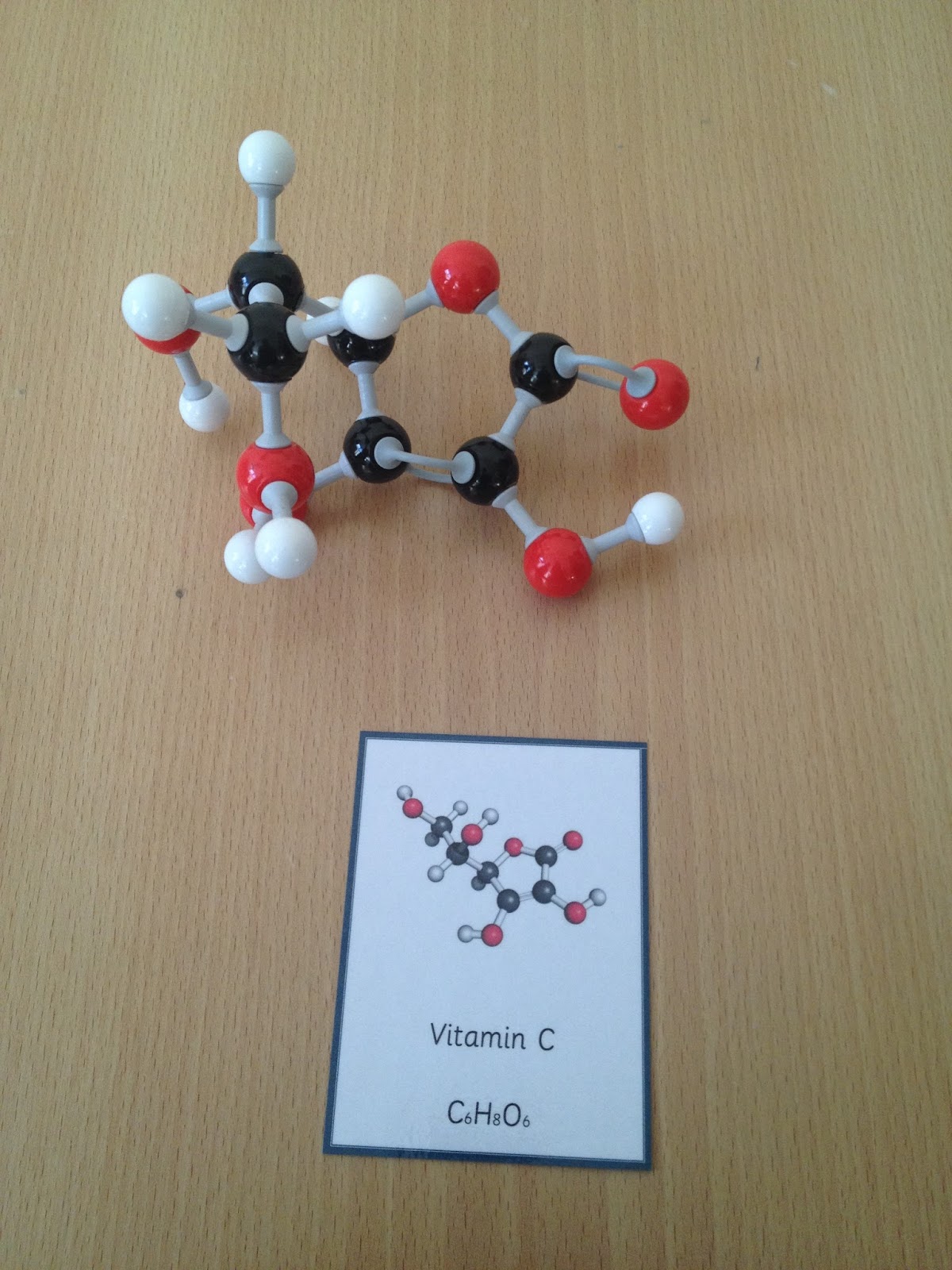

I made these molecule cards for the children to use as guidelines for making molecules.


The cards cover 30 basic molecules and are designed to be used alongside a Molymods kit but can also be used with homemade molecules. These cards are very popular in my store.


Here's Noah working with the basic elements using the molymod kit.
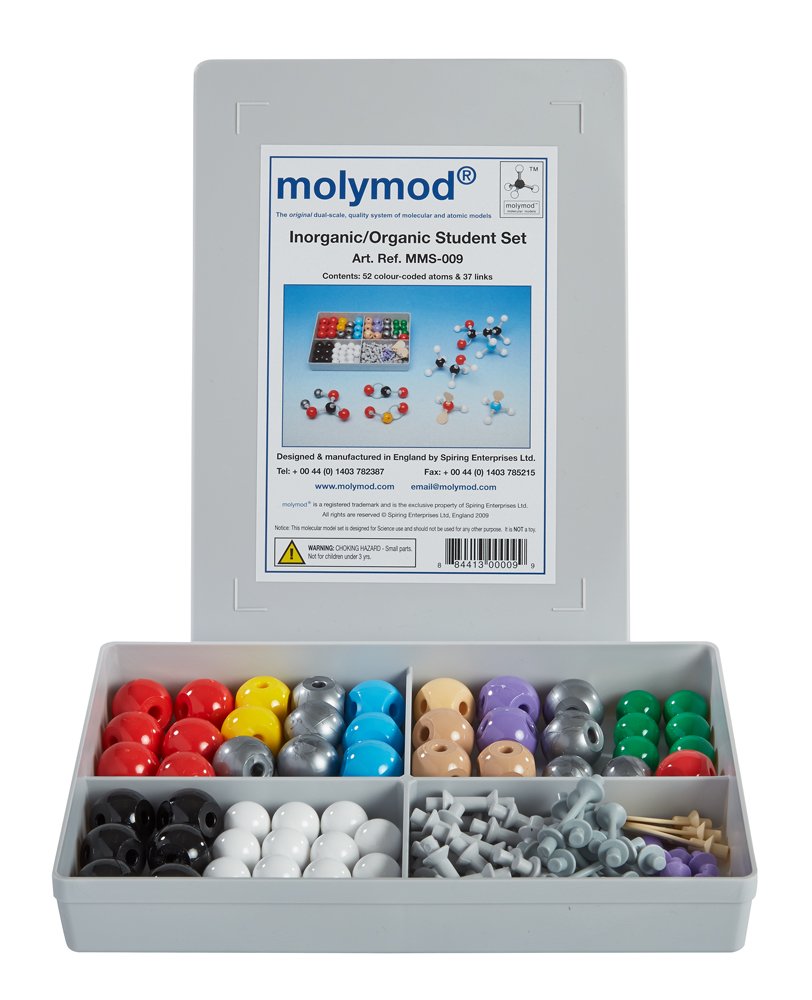

The molymod kit can be purchased from Amazon and is reasonably priced.


Here are some other ideas of molecule kits I've found in the blogsphere:

(Photo from Critters and Crayons)

I love this molecule kit used by Critters and Crayons


This is a lovely example of homemade molecule models.


Here is another lovely blogpost using a molecule kit.


I found this lovely sample presentation on the basic molecular theory using marshmallows and toothpicks.

Interestingly, after Noah worked with our molecule kit and cards, he began seeing molecules everywhere. Once day we walking into a furniture store and saw a light fitting which consisted of balls and rods. Noah immedietly said 'Look mum they've made a methane light fitting'. I love the way Montessori children see the world.😆


Monday, 31 October 2016

Great Lesson 1 : The Periodic Table [Post 9]

Following on from my last post on the atom, this post will look at activities and ideas I have used to introduce the periodic table to my class. 

To begin, it is important to have an attractive and accurate periodic table for the children to work with. I created this periodic table activity below and it is definitely one of my favourite materials. This can be downloaded from here.


I wanted the periodic table to really stand out, so I made sure I used bright colours on a black background. The control chart includes all the details, while the working chart is blank and the child uses the small printed tiles to construct the periodic table. Initially, the child will work with both charts alongside each other, but eventually, the child should be able to use the blank chart and count how many elements they can place correctly without the control.


The children can also use the blank chart to make their own periodic table. I have included one with the periodic table for sale here. Or you can download one for free here.


The Elements book by Theodore Gray is a definite must have when working on the periodic table. It contains beautiful images which really capture the children's interest. Noah read this book for hours. 


The book also includes a foldout periodic table like this one below.


(Photo from http://elements.wlonk.com/)

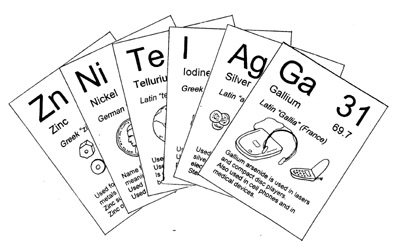
I printed these element cards from this website. They also have free periodic tables and other element printouts. We used these cards for a matching activity.

(Photo from ETC Montessori)

I also have a set of these cards from ETC which are really beautiful. We use these to construct a visual periodic table and to look at the layout of each atom.


(Photo from http://ellenjmchenry.com/)

These cards are also available for a free download with instructions on how to play the Quick Six card game.


I used this free download for children to create their own element booklets.


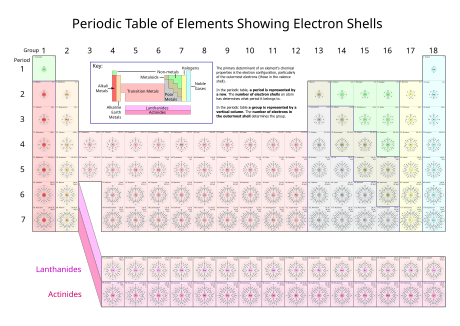
(Photo from Wikipedia)
To help children make the elements on our atom board, I printed out this periodic table from wikipedia and cut it into individual elements. The cards show the number of electrons in each shell. 


This previous post shows our atom board.


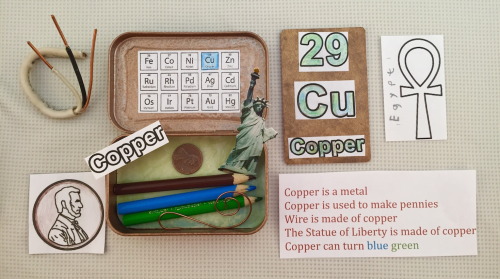
I love this idea and would like to encourage my class to make individual element boxes which are added to by students over the years. The items can also used for something like below:

(Photo from Pinterest)


(Photo from here)

Finally for our next project, I would really like to make a floor sized periodic table, where each element is one A4 page. This would specifically appeal to kinesthetic and spacial learners. I plan to use the element printout from here but keep to the original colours from our Montessori periodic table.

Monday, 10 October 2016

Great Lesson 1 : Moon Phases [Post 7]

Since I have renewed my vows to blog again..I will be starting with continuing my Great Lesson 1 posts from 2015. 

The next great lesson 1 follow up activities are on the moon phases. 


Moon Phase Box


This first thing I like to do with moon phases, is provide the children with experiences that help them to understand why the moon appears differently throughout the month. I do this through a series of activities which they can repeat as often as they like.

Firstly, I gather the children to make a moon box like this. 

(photo from education.com)

Instructions for a moon box can be found here and here. This is fairly simple to make, so I allow my elementary children to get on and make one themselves. Once the box is made, we shine a torch through and peep through the different holes. Looking through each hole, the child will see the moon appear differently. If possible, use a circular box as this will give and even better impression. 


Moon Phase Demonstration


(photo from nasa.gov)

Another activity we do is model out the moon phases in a dark room. For this I have the child stand in the centre of a dark room on a printed earth, to symbolise viewing the moon from the earth. The child hold a polystyrene moon on a cocktail stick straight in front of him. Another child stands at one end of the room holding a torch, shining on the child on the earth. The child in the centre (on the earth) rotates slowly, holding the moon out in front of him observing the moon's appearance as it changes. 

The Nasa website has detailed instructions of how to demonstrate this here

Here's a youtube video that shows the demonstration.


Through these two activities and others, the child develops an understanding of what moon phases are. This makes the language of the moon phases so much more meaningful. 


Moon Phase 3-part Cards


ETC Montessori have a lovely set of moon phase cards which I have used for years. The cards can be downloaded for free from their website here. Unfortunately, I don't have a photo of them set up.


Moon Phase Chart


My children then use the 3-part cards to make their own moon chart like this. This one is very basic, using a white pencil. However, I love to give the children a full range of materials to get creative and make their charts out of anything they like.


Moon Phase Puzzles


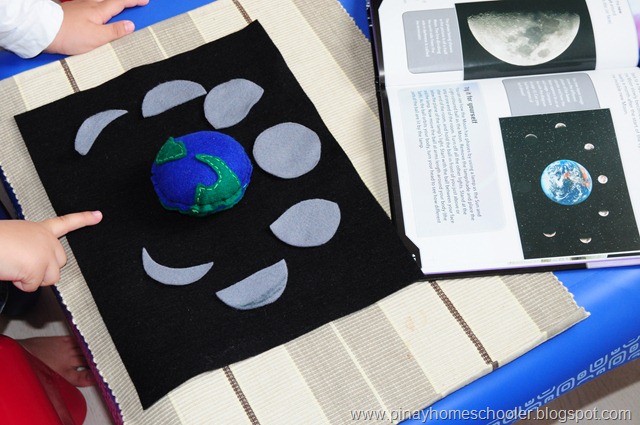
Unfortunately, I am not lucky enough to have a moon phase puzzle yet! This is one piece of material I have on my waiting list to make. I have seen quite a few blogs with home made puzzles. This felt puzzle from Pinay Homeschooler is lovely!


 (photo from The Pinay Homeschooler)


Moon Research


As with all the other follow up lessons, I guide the children to research our moon themselves. Some have even gone on to look at the moons of other planets. As with all research I encourage the children to record their finding and make visual props to demonstrate their understanding. This usually leads to a classroom performance giving all the children the opportunity to hear what has been researched. 

Saturday, 14 November 2015

Great Lesson 1 : Solar System [Post 6]

There are many great Montessori posts on the solar system. This post may not add anything new to the blogosphere, but I feel it is necessary for my First Great Lesson posts. So here is a glimpse at what we do.


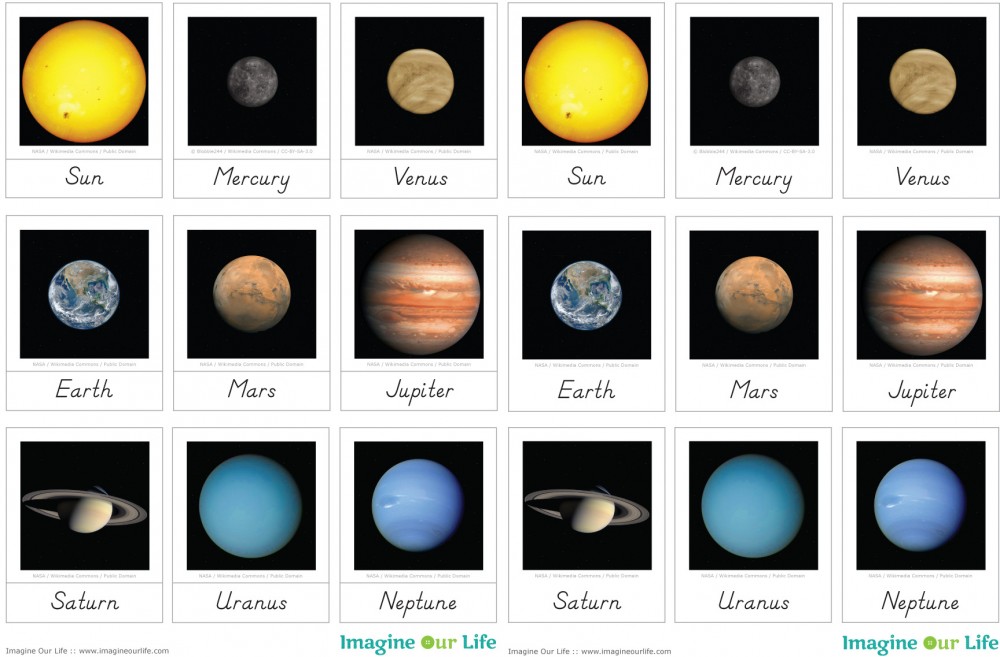
3-Part Planet Cards


3-part planet cards with handmade scale models.


These models are made from polystyrene balls. They are made to scale to our sun mat.


Imagine Our Life has this free download for planet cards

[Photo from Image Our Life]


Scale of Planets

The scale of planets fascinates the elementary child and suits their imaginative mind. Lolly has a lovely post on her blog Elementary Observations here. She has a free download for a planet scale activity. 

[Photo from Elementary Observations]


Solar System Riddles

Lolly also has this set of Solar System riddles which are perfect for the elementary classroom. Riddles are always a big hit in my class. These are also the perfect way to integrate language arts into the great lessons. I also encourage my children to write their own riddles.

[Photo from Elementary Observations]


Planet Research

As usual, I encourage my children to pick a planet to research. This is the sheet we use for the younger children. 


I saw the original somewhere in blogsphere but can't remember where. The questions asked are:
Name of Planet?
What number is this planet from the Sun?
How far is this Planet from the Sun?
How big is this Planet from one end to another (diameter)?
What is the temperature of this Planet?
Does the Planet have an atmosphere?
Which gases make up its atmosphere?
Three facts about this Planet

I encourage each child to research one planet and together we create solar system research book. Sometimes a couple of children decide to research all the planets themselves and make their own booklets.

I have these astronomy research guides from Montessori for Everyone. I use this with my older children.

[Photo from Montessori For Everyone]


Astronomy 3-Part Cards


[Photo from Montessori For Everyone] 

There is something similar for free here.


Planet Related Experiments

The Geography Impressionistic Charts from Montessori for Everyone has a solar system chart and planet related experiment cards. 

Noah doing the colour of Mars experiment.

These are the experiments in the pack. 
  1. The bands of jupiter: It is very similar to this experiment on density.
  2. The colour of Mars [above].
  3. The impact of craters: A brief description on here and here.


Solar System Pastels Drawings


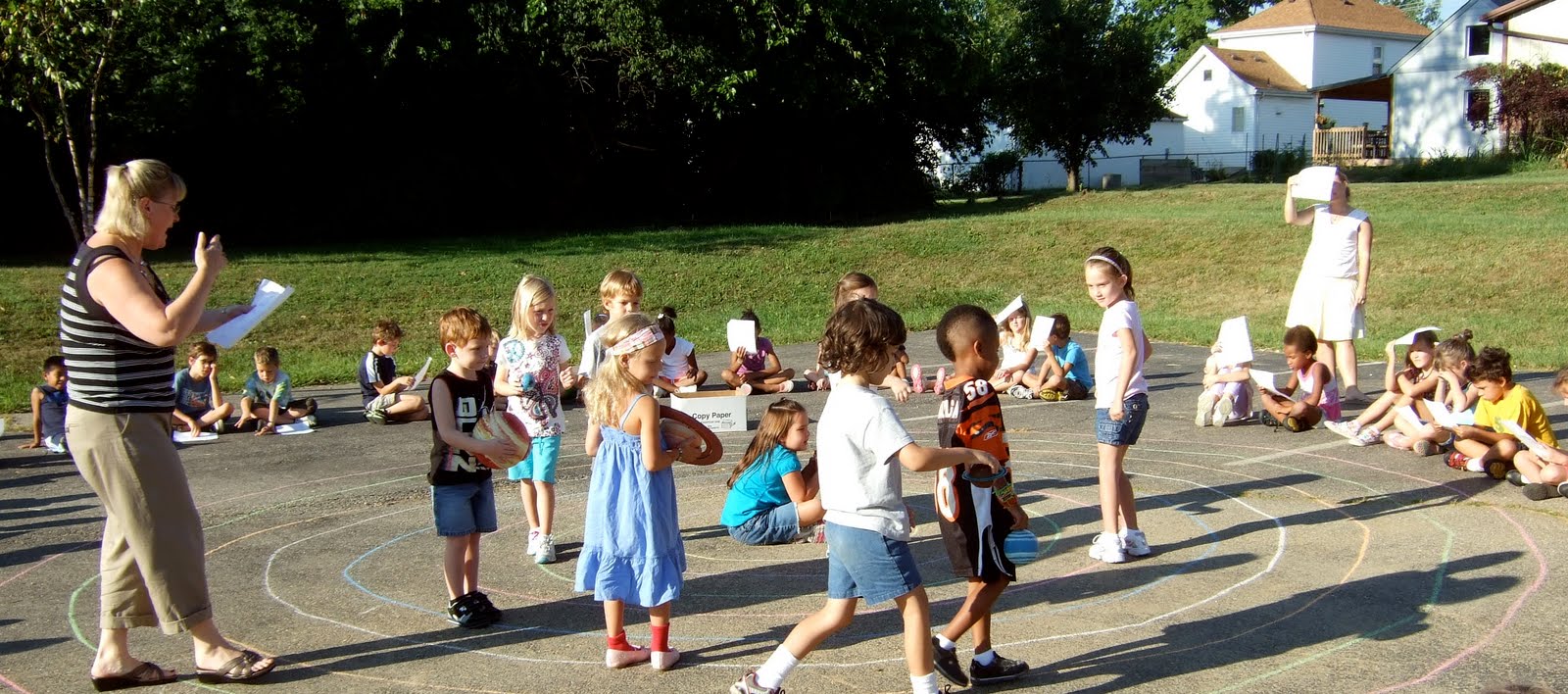
Solar System Dance


The solar system dance is really fun and best done outside. Each child takes on the role of a planet, the sun, the moon or an asteroid. Each role is described in detail and the children act out the solar system. 

I made these labels for the children to wear while doing the dance. They can be downloaded for free here.


Distance of the Planets From Sun


This is a lesson that I can't wait to try.There is a blog post about it here and another here.

The instructions for this solar system toilet paper activity can be found here.

Thursday, 29 October 2015

Great Lesson 1 : Types of Galaxies [Post 5]

Galaxies are another fantastic follow up to the first great lesson.

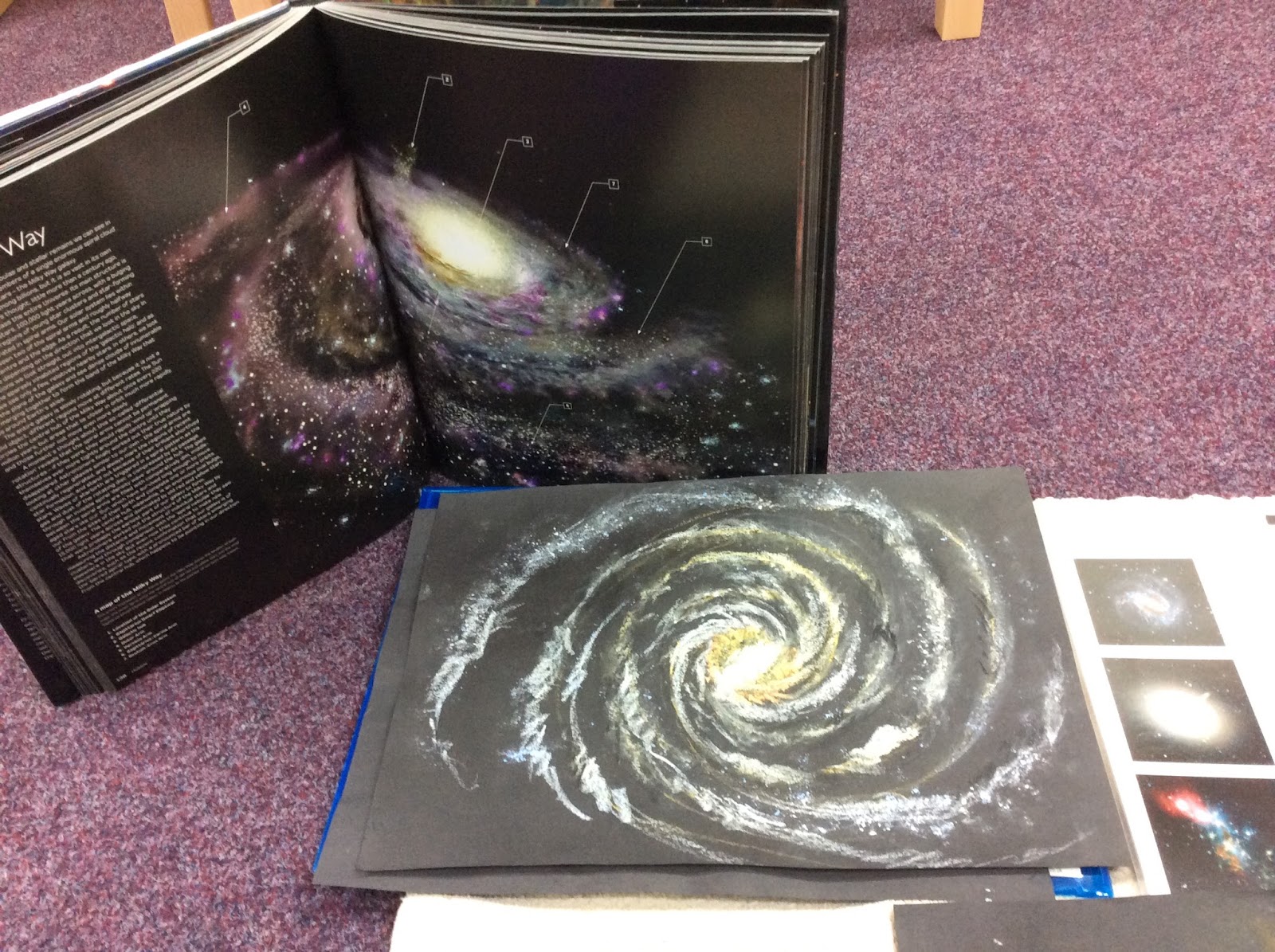
Since galaxies are incredibly beautiful, I wasn't satisfied with printing out pictures for this lesson. I wanted pictures that would inspire awe and creativity. So with a friend of mine, I created these galaxy pastel drawings. 

We first spoke about the formation of galaxies, recalling what was discussed in the great lesson. Next we introduced three types of galaxies; spiral, elliptical and irregular.  

Here is a layout of all three galaxies.

Spiral Galaxy

 Elliptical Galaxy

 Irregular Galaxy

We used this poster as a guide for the types of galaxies. This can be downloaded for free from my shop here.
http://thelearningark.com/content/types-galaxies

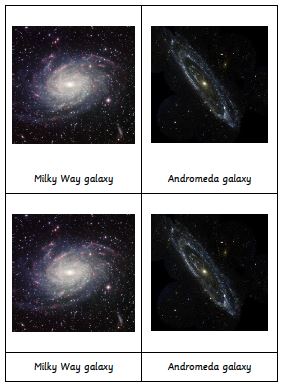
Next we looked at different galaxies which have been discovered. I made these 3-part cards for ten different galaxies.
These can also be downloaded for free on my site
(all photos were taken from Wikipedia)

Children were encouraged to pick a galaxy and research it further.

This book fit perfectly with this lesson.


Of course, the children were inspired by the pastel pictures and eagerly drew their own. 


Here is an old photo of  Noah drawing spiral galaxies using pastels at the age of 9. As you can see he got right in and even smudged pastels on his face lol! Noah is now 11 years and he still enjoys this activity each time we tell the great lesson.

Saturday, 24 October 2015

Great Lesson 1: Volcano Studies [Post 4]

After telling the first great lesson each year, the most loved follow up work is always the volcano activities. Here are some ideas I use in my class and my children enjoy.


Volcano Experiment

Firstly, I always have two volcanoes on display. One is my grand big brilliant volcano which I use for lessons. The second is a much smaller one which children can use independently. The children are able to take out the smaller volcano anytime and follow the instructions to make it erupt. 

The main volcano in the picture shows my large grand one. Just behind the white box you can see the top of a smaller volcano.

In the white tray I have a supply of vinegar and baking soda. The children use a spatula to fill the volcano with baking soda and a pipette to add the vinegar. This way they don't use to much of the ingredients at once. 

As you can probably tell from the photos, these volcanoes are handmade. Both volcanoes have removable bottles which make them easy to clean. I used this youtube video, but did not follow the exact instruction.


Montessori Beginnings has another good tutorial on how to make a volcano.

Each of these volcanoes has a built in tray which holds the lava and mess from the eruption. This has been perfect for avoiding the terrible disasters I previously had when the volcanoes stands in a separate tray.


Parts of a Volcano

 Alongside the volcanoes, children will work with the part of the volcano cards. I have a set available at my store, shown below and available here


http://thelearningark.com/content/part-volacano


Alongside the volcano cards, the children use the above printout to make their own volcano booklet. This is available for free here. The picture of the volcano was taken from Free Colouring Pages.

Of course the volcanoes make appearances in various other lessons. Below, I was presenting a lesson on the use of a comma and a child decided that the volcano was the perfect prop to use.


Types of Volcanoes

I used this great chart to make three part cards for types of volcanoes. I am not sure who is the author of the chart so I can't share the cards. The chart is available here. 


Real Volcanoes

It is also great fun for the children to look at real volcanoes. 


Helpful garden has a free download for pictures of volcanoes. 


Pinay Homeschooler has a free set of volcano cards from around the world. 


Volcano Research

For children who have a great interest in volcanoes, I encourage them to carry out research on an actual volcano. The below picture shows research guidelines which the children use as a basis of their research. Unfortunately, I can't remember where the pictures came from so I can't share this. Sorry!


Make a Volcano Model

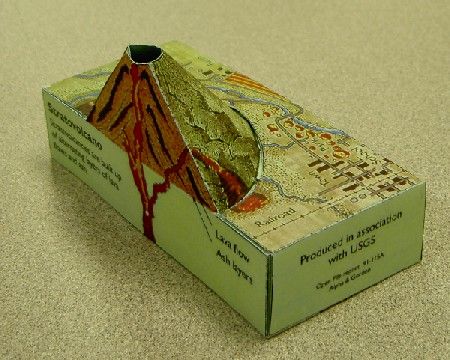
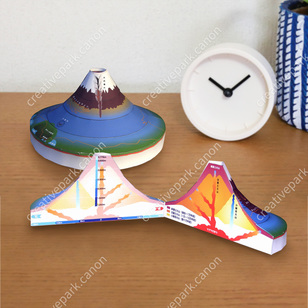
Of course, making a volcano is the ultimate volcano activity children love. Making a clay or papermache volcano is always nice but can get a bit messy. Here are some great paper volcanoes I found online.


Volcano cross section from Papermau.


Canon have a print out for Mt. Fuji. This model is beautiful!


Map of Active Volcanoes


Another activity is to make a map of active volcanoes. I provide the children with a blank world map and some good books on volcanoes, as well as the above chart (found on wikipedia). The children make their own charts and discuss where it may not be safe to live!


I am sure there are many more things which can be done about volcanoes. If you have anymore ideas please let me know.