Sunday, 18 October 2015

Free Downloads Updated

I have updated my download page and fixed any broken links.

Please find the latest verion of my downloads here. I will continue adding to this list as I post new material. Please let me know if a link is not working or if there is an error on a file. Feel free to download and use these files but link back to my blog when you share them. Do not copy or sell these files.

Language


Mathematics

Geometry


Science

Organ Cards - post

Saturday, 3 October 2015

Great Lessons Round Up Intro [Post 1]

Each year, I search the internet for inspiration for new activities to follow on from the Great Lessons. There are so many great ideas out there. But I have not yet come across a Great Lesson round up post. So my task for this year is to gather all the inspirations I have come across in the blog world for each Great Lessons. 

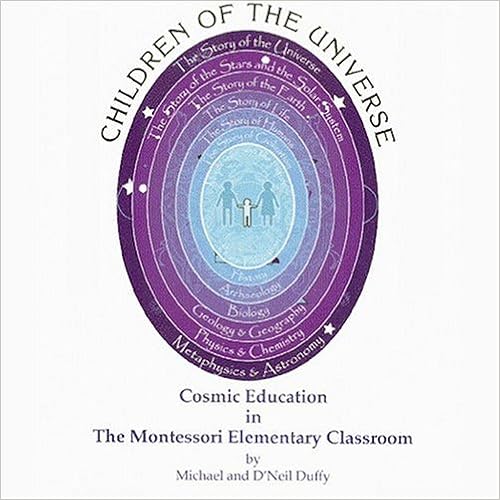
For those of you who are not familiar with the Great Lessons, Montessori designed these as the foundation of the Montessori elementary curriculum. They form the backbone of Montessori elementary education and are often the starting point for all other learning. The Great Lessons are designed to meet the sensitive periods of the elementary child and provide the child with the context of the place of man in the universe. Through introducing these lessons, all aspects of the cosmic curriculum are covered. 

The five [maybe 6] Great Lessons are:

1. The Creation of the Universe
2. The Coming of Life
3. The Coming of Man
4. The Story of Writing
5. The Story of Numerals
[6. The Great River]

Some Montessorians present these lessons every six weeks, providing time for follow up work before moving onto a different lesson. Others present all the lessons in the first few weeks and spend the rest of the year doing follow up lessons. I have only presented these in the first way and have found that this was helpful for my class.

Each time I present a great lesson, I set up a specific shelf for follow up activities and scatter various other activities across the class in each curriculum area. This creates an atmosphere of the great lesson and really engages children.

I am a strong believer that these great lessons should be kept for the elementary child and not introduced too early.  The elementary child presents us with different needs which make these lessons suitable. Whereas the younger child has different needs and sensitivities and so these lessons are not ideal. I believe there are so many more relevant things a child who is under six can do before approaching these lessons.

I run the same lessons every year for my entire elementary class. This means that my 12 year old children would have heard this lesson 6 times in their elementary years. Each year I add a few more details and tell the lesson slightly differently. I also encourage my 11 and 12 year olds to join in telling the stories or presenting follow up activities. 

My favorite Montessori quotes on cosmic education and the elementary child:


"Since it has been seen to be necessary to give so much to the child, let us give him a vision of the whole universe.  The universe is an imposing reality, and an answer to all questions." 
(To Educate the Human Potential, p. 5)

"If the idea of the universe be presented to the child in the right way, it will do more for him than just arouse his interest, for it will create in him admiration and wonder, a feeling loftier than any interest and more satisfying.  The child’s mind will then no longer wander, but becomes fixed and can work.  The knowledge he acquires is organized and systematic; his intelligence becomes whole and complete because of the vision of the whole that has been presented to him, and his interest spreads to all, for all are linked and have their place in the universe on which his mind is centred." 
(To Educate the Human Potential, p. 6)

"No matter what we touch, an atom, or a cell, we cannot explain it without knowledge of the wide universe.  What better answer can be given to those seekers for knowledge?  It becomes doubtful whether even the universe will suffice.  How did it come into being?  How will it end?  A greater curiosity arises, which can never be satiated; so will last through a lifetime.  The laws governing the universe can be made interesting and wonderful to the child, more interesting even than things in themselves, and he begins to ask:  What am I?  What is the task of man in this wonderful universe?  Do we merely live here for ourselves, or is there something more for us to do?  Why do we struggle and fight?  What is good and evil?  Where will it all end?" (To Educate the Human Potential, p. 6)

If you would like to know more about the great lessons I suggest reading the following:

AMI article on Cosmic Education

The Learning Ark Materials Shop GIVEAWAY!

I am having a giveaway on my The Learning Ark Materials Shop Facebook page and would like to invite you to join!

Hop over to my online shop and see if you fancy any files.

www.thelearningark.com

Then enter this giveaway for your chance to download any 3 files for free.

To enter...like my Facebook page and share it on your timeline. Then leave a comment here or on the Facebook page. Make sure you are following this blog and my Facebook page so you can see when I announce the winner.

Winner will be randomly selected on the 10th of October.

Tuesday, 4 August 2015

Upper Elementary - Advanced Montessori Grammar Symbol Charts

I have just returned from my upper elementary training where I got to see some of the most complex and beautiful advanced grammar and mathematics lessons. I have about a month until schools starts back and now I have a long list of upper elementary materials to make for my class. I am super excited to show Noah [who is now 11 years btw] the new activities and he is itching to get his hands on them as he patiently watches me make them.

The first material on my list....

Advanced Montessori Grammar Symbol Charts

I finally got to see the complete presentations and understand what each symbol represents. The charts contain the 9 regular symbols plus additional symbols for abstract nouns, proper nouns, auxiliary verb, intransitive verb, copula, infinitive, participle and gerund. The reasoning and thought behind each symbol emphasizes the greatness of the Montessori grammar curriculum.

I have added these charts to my shop here just in case anyone else is in need of one for their classroom.

Next I will be making the personal pronoun lessons...

Thursday, 9 April 2015

Carbon Cycle Activities

Recently we have been working on activities to promote sustainable living. As part of this study the children calculated their carbon footprint. In order to fully understand the weight of their carbon footprint I created this carbon cycle chart.


The chart contains movable cards for each part of the carbon cycle. On the back is a description of that card and it's process.


 Once we laid out all the cards and I finished my presentation, the children were silent and their faces displayed the shock of realisation that their actions are destroying the earth. One child immediately pointed out that more carbon is being released into the atmosphere then is taken away. We discussed the side effects of excessive carbon in the atmosphere. The children left the lesson insisting that they must do something to improve the situation.


The carbon footprint worksheet was a great follow up. Each child filled out a form and all were disgusted by their results. I am sure they each went home and began thinking about switching off the lights and reusing plastic bottles.


You can download the free carbon footprint worksheet from here.

Monday, 18 August 2014

Infinity Street

Not long ago I was introduced to a brilliant counting activity which has been invented for Montessori classrooms; Infinity Street. This activity is designed to give children the opportunity to practice reading and making numbers beyond a trillion. 


 Each number family is represented in a house on infinity street. In each house lives the units, tens and hundreds. The houses increase with size as the numbers get larger.

The number families represented on this street are, units, thousands, millions, billions, trillions, quadrillions, quintillion, and sextillions. Of course the houses can go on and the numbers can increase but I found that this was sufficient for the children. Each number family name was written on a card which also contained a comma.

This activity is very easy to make. It took me about 40mins to cut all the houses in yellow foam and the colour strips in red, blue and green. 


Here is the activity in use by some children in the lower elementary classroom. The coloured strips are actually made for the beads to fit.  After the child lays out all the houses, they select beads at random or to make a chosen number. Once the beads have been placed in each house, the child practices reading the number using the cards to help. 


In this particular photo the child made the number 111,659,232,875,768,888,111,466. To read the number the child said; one hundred and eleven sextillions, six hundred and fifty nine quintillions, two hundred and thirty two quadrillions, eight hundred and seventy five trillions, seven hundred and sixty eight billions, eight hundred and eighty eight millions, one hundred and eleven thousands, four hundred and sixty six. 

It is truly amazing that a child of 6 or 7 can read numbers so large with accuracy :)

As will all other Montessori materials, the child will gradually work away from using this activity to being able to read the numbers in complete abstractions. 

Saturday, 26 April 2014

Introduction To The Checkerboard Lesson

The checkerboard is one of my favourite pieces of Montessori materials. 5 years ago I blogged about this homemade checker board which I made  from felt.  

I have had great success introducing the checkerboard to my students. However, I have noticed that some students do find it difficult to understand the place value of each square on the checkerboard. I was recently introduced to this preliminary exercise which I have now started using in my elementary class. This lesson is great and  has been very popular :).  

It is very easy to make this activity. Each of the squares is cut out from felt. They measure 4cmx4cm. You need 10 green, 9 blue and 9 red. 
I then made label cards for each square. I have uploaded the file here to share with you all for free. 


When presenting this lesson you start with the unit row [bottom row]. You place the green square at the bottom right of your mat and label it. To the left of this you place the blue square, name as 'tens' and label. You continue placing the squares for this row until you have reached 1 million. Next you start on the tens rows by placing the ten square on the second row above the units and continue placing the squares and labeling until you reach ten million. The hundreds and thousands rows are built in the same way.

A fun extension to this lesson is to play a card game. 2-3 children can randomly select a pile of cards. Each child then has to place the labels on the correct square. The winner is the child who first places all the labels correct!

Let me know if you make and try this lesson. I'd love to know how it works for others.